
At Alpine Auto Glass, we know tinting your car windows offers more than just a sleek, stylish look. It provides critical protection against the sun's harmful ultraviolet (UV) rays. Understanding the science behind UV protection can help you appreciate the full benefits of automotive window tinting, for both your health and your vehicle's longevity.
What is UV Radiation?
UV radiation is a form of electromagnetic radiation emitted by the sun. It's divided into three main types: UVA, UVB, and UVC. UVC rays are mostly absorbed by the Earth's atmosphere and don't pose a significant threat. However, UVA and UVB rays can penetrate the atmosphere and reach your skin and eyes. Prolonged exposure to these rays can lead to sunburn, premature aging, and an increased risk of skin cancer.
How Auto Tinting Blocks UV Rays
Most modern automotive window films are designed to block a significant percentage of UV rays. High-quality films can block up to 99% of both UVA and UVB radiation. This is achieved through several methods:
UV Absorbers: Many window films contain special UV-absorbing chemicals that prevent UV radiation from passing through the glass.
Reflective Properties: Some films have a metallic layer that reflects UV rays away from the vehicle.
Tint Darkness: While darker tints generally offer more heat rejection, even clear window films can provide substantial UV protection.
Benefits of UV Protection
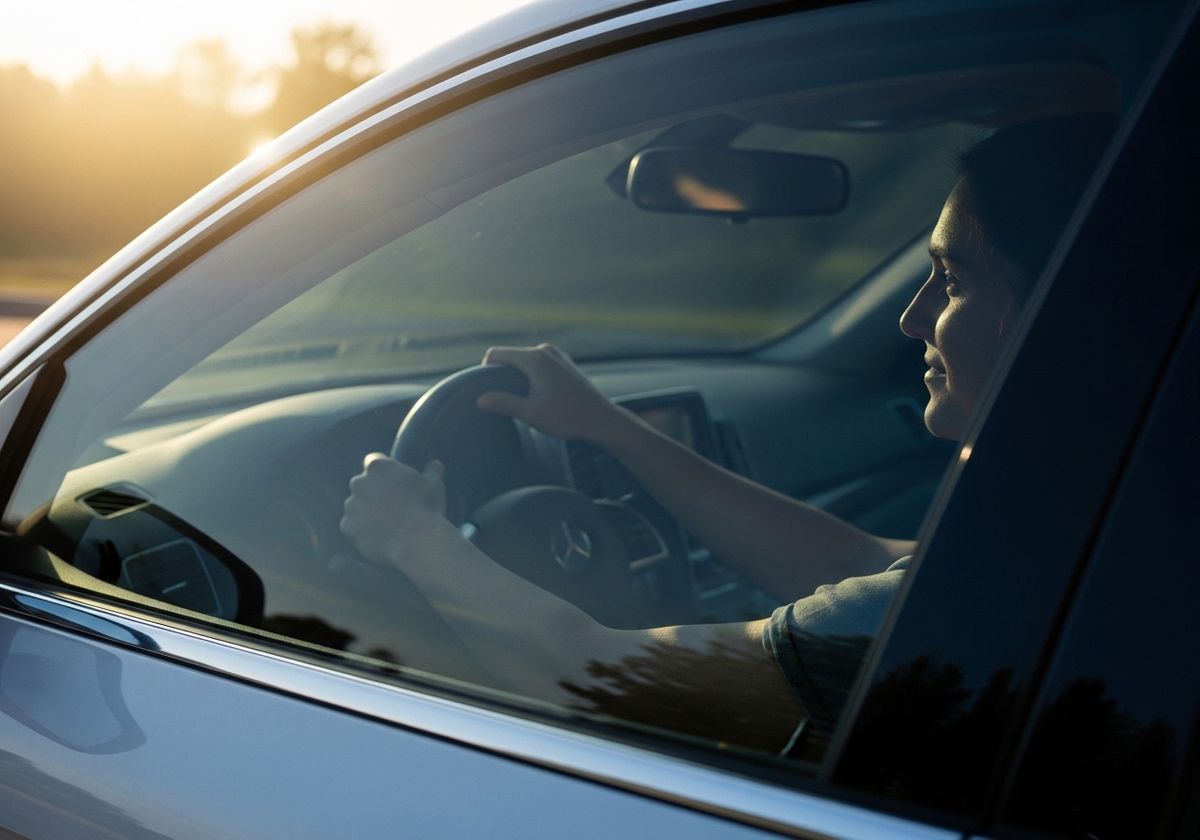
Skin Protection: By blocking UV rays, auto tinting significantly reduces your exposure while driving, helping to protect against skin damage and cancer.
Interior Preservation: UV radiation can fade and crack your car's interior over time. Window tinting helps preserve the condition of your upholstery, dashboard, and other surfaces.
Reduced Glare: Tinting can reduce glare from the sun and headlights, improving visibility and driving comfort.
Temperature Control: By blocking solar heat, window tinting can keep your car cooler, reducing the need for air conditioning and saving fuel.
Types of Window Tinting
Dyed Film: An affordable option that provides some UV protection and glare reduction.
Metallic Film: Contains metallic particles that reflect heat and UV rays. It can sometimes interfere with electronic signals.
Carbon Film: Offers excellent heat rejection and UV protection without signal interference. It has a matte finish.
Ceramic Film: The highest quality option, providing superior heat rejection, UV protection, and clarity. It is non-metallic and won't interfere with electronic devices.
Understanding the science of UV protection highlights the importance of investing in quality automotive window tinting. Alpine Auto Glass understands the importance of protecting you and your vehicle from harmful UV rays. We offer a range of automotive window tinting options to suit your needs and budget, reflecting excellence in window replacement & repair. Contact us today to learn more about our automotive window tinting and residential tinting services and discover how we can help you stay safe and comfortable on the road.